
The ribbon is cut, the photographs look beautiful and someone has finally found the last box of robes. Congratulations: the spa is open. Now begins the part rarely shown in the renderings.
After opening, concept meets reality: unpredictable guests, physical workloads, software, stock, absence, late requests and doors that open the wrong way. This is not failure. It is the normal stabilisation phase — provided it is managed.
Days 1–30: make it safe
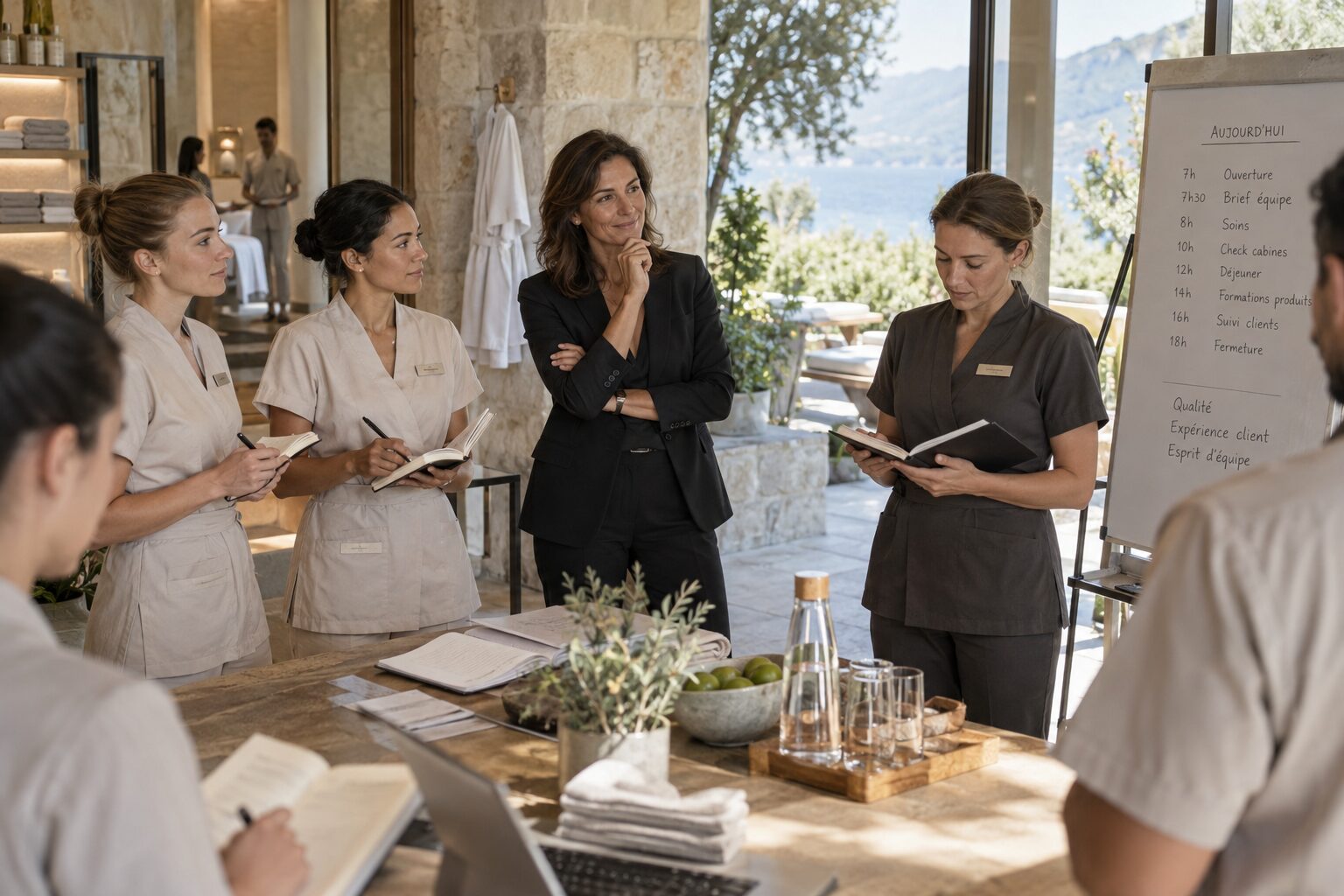
The priority is not to fill every slot. It is to make the experience safe, repeatable and clear. Hold a short daily briefing covering incidents, guest feedback, workload, critical stock and one decision for the day. Keep a single issue log so problems do not live in seven separate conversations.
- Verify hygiene, contraindications and emergency protocols.
- Track delays, room turnaround and no-shows.
- Watch peaks, queues and bottlenecks.
- Protect breaks and team recovery.
Fix anything affecting safety or the essential promise immediately. Group the rest. Changing a procedure every morning quickly turns the spa into an escape room.
Days 31–60: simplify
Study what sells, what guests understand and what teams deliver well. A rarely booked treatment may not be poor; its name, duration, audience or recommendation may be unclear. Conversely, a bestseller can be low-margin or physically exhausting.
Improve handovers, useful scripts, storage, stock levels and buffers. Run weekly practice on consultation, recommendation, treatment endings, retail and rebooking. Commercial confidence comes from relevance, not theatrical pressure around today’s target.
Days 61–100: optimise
You now have data stable enough for decisions. Review sellable-capacity use, achieved price, revenue per hour, product cost, payroll, feedback, rebooking and human signals. Segment by day, time, treatment and channel; a monthly average can conceal as much as an oversized robe.
Choose no more than three priorities: adjust the menu, revise schedules, build a skill, improve conversion or develop local demand. Each action needs an owner, a measure and a review date.
The operating rhythm
- Daily: ten minutes on safety, workload and friction.
- Weekly: performance, quality, people and one testable decision.
- Monthly: economics, menu, scheduling and training plan.
Regularly include reception, food and rooms. A spa does not stabilise alone; demand and reputation are built across the hotel.
What not to do
Do not launch a promotion whenever the diary has a gap. Do not keep twenty protocols because they appeared in the opening deck. Do not confuse team heroics with an operating model. Above all, do not answer every difficulty with “we need to communicate more”: sometimes you simply need a shelf in the right place.
A successful opening creates momentum. The next hundred days create the business.