
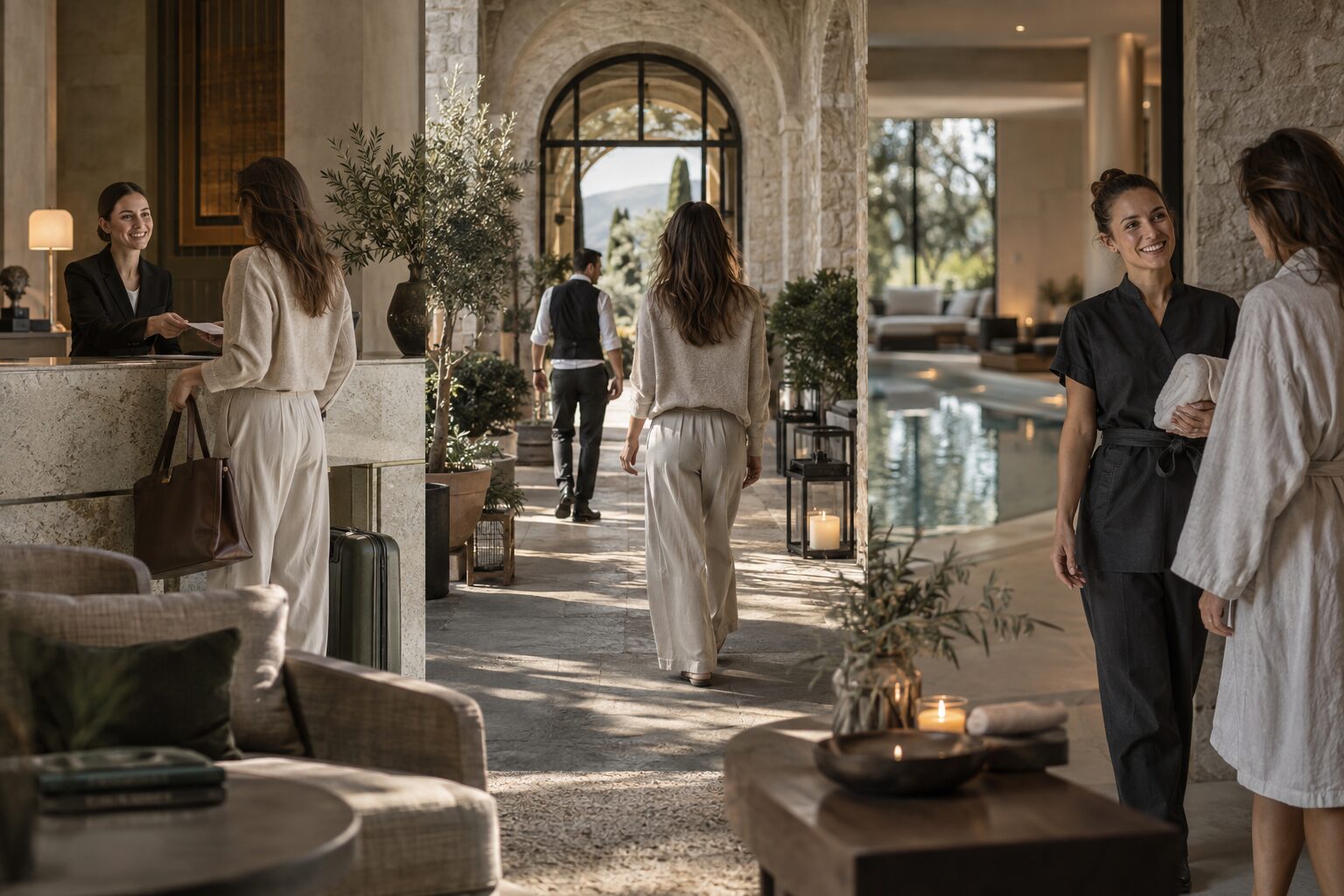
In many properties, wellness has an address: the spa, down the corridor, just past the fitness room. Convenient for the floor plan. Far less useful for the guest.
Wellbeing is not a place visited for fifty minutes. It is how a property welcomes, feeds, helps people sleep, energises, reassures and occasionally restores them. When reception promises care but arrival feels rushed, breakfast stages a sugar convention, or the spa whispers while the rest of the hotel shouts, the experience breaks apart.
The guest does not see your departments
They live one story. It starts before arrival with clear information, an easy booking and a sense that their needs have been understood. It continues in the room, at the table, through shared spaces and every human interaction. A massage cannot erase a noisy night. A wonderful pillow cannot rescue a confusing spa journey. Guests do not politely average your organisation chart.
Move from an offer to an intention
Before adding another treatment, retreat or juice bar — the world may survive one fewer smoothie — ask three questions:
- What state are we helping the guest leave behind?
- What state do we want to guide them towards?
- Which moments in the stay can support that shift?
A hotel that owns sleep can work on light, noise, bedding, timings, evening food, treatment rituals and even check-out. One centred on reconnection can use nature, movement, human connection and digital restraint. A clear intention prevents a catalogue of trends with no spine.
What I look for on site
I watch transitions: between room and spa, after a treatment, or when a guest asks someone outside the “right” department for advice. Breaks often hide in spaces nobody owns — waiting, signage, handovers and contradictory information.
I also listen to language. Teams who understand the promise can translate it naturally without reciting the brochure. Reception can guide guests towards a relevant experience, the restaurant can explain lighter choices without making them sound punitive, and the spa can recommend without pushing.
A practical starting method
- Map the real journey, not the one imagined in meetings.
- Choose two or three credible guest benefits.
- Align standards, spaces, offers and language.
- Train every team in useful behaviours and the limits of their role.
- Measure perceived coherence, not spa revenue alone.
Wellness becomes powerful when it stops being an internal destination and becomes a shared way of caring.
The result is not necessarily spectacular. It is better: fluid, credible and memorable. Guests may never praise your perfectly integrated ecosystem. They will simply say, “I felt good here.” That is the point.